Sunday, 1 January 2012

Hobbies in the dorm room


So you are away from home in a strange place where you are supposed to be focused on your studies and, oh yes, your whole future! Does that mean you should give up your hobbies that you enjoyed from the comfort of your own home? Would it be a distraction from your performance as a student? NO, not necessarily!

Staying current with your outside hobbies and interests only enriches your college experience as long as you do not become obsessed with it. In some cases a hobby may relate to your educational interests and have aspects of science, mathematics, or history. If you can tie your hobby into your studies, your pastime becomes a tool and a passion reflective of your studies.

One such hobby is aquariums. When keeping aquariums you are putting to use principals of biology, marine biology, water chemistry and other science. It is an opportunity to observe animal behavior, reproduction and other aspects of the hobby that may directly correlate to your classes. Freshwater planted aquariums open you up to subjects of photosynthesis, plant nutrient uptake, the affect of aquatic plants in the Eco system, and various environmental issues.

Web sites such as Aqua Botanic provide much of the information one needs to know to get started in the hobby and an introduction to the science behind it that could be applied to your studies. Here are some examples:

Rhizomes and Tubers

The Role of Photosynthesis in the Aquarium

Water Plants 101


What to consider


When considering bringing a hobby into the dorm room, think about how it would affect the comfort of your room mate, and how much time and resources it would take.
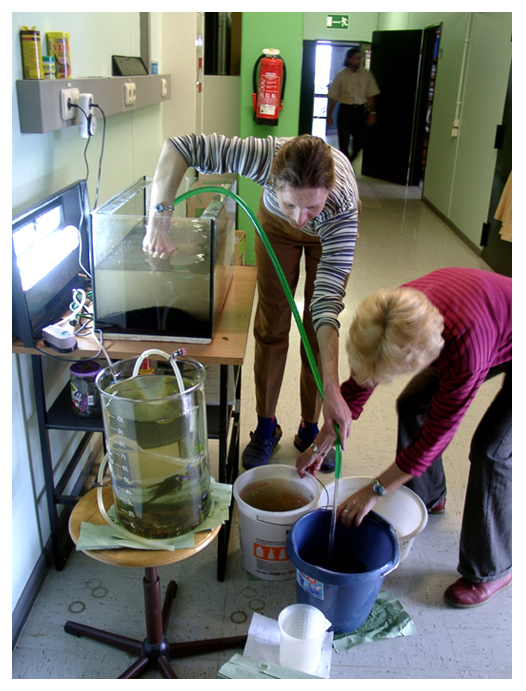
An aquarium takes up space, may create some noise from equipment, and needs a source of water and power. Depending on the type of aquarium set up and approach, it requires a certain number of hours per week of maintenance. This can be your time to enjoy and observe the aquarium as well, but you may want to consider researching various low maintenance approaches to keeping an aquarium or planted aquarium. Also consider the cost of bringing your hobby to the dorm: equipment, materials, and supplies.

Take notes!

A hobby that involves science is particularly useful to school if you take notes! Create a diary of your hobby where you can write observations, daily activity, problems or issues that required resolution and how you fixed the issues. This can be valuable information for not only improving your hobby, but to learn wonderful lessons- hands on experience that may help you in how to choose a career. Just do not blow up the dorm in a mad scientist experiment!


New years resolutions

Of course everyone is aware of the tradition of making New Years resolutions. Most often they are lofty ideas that are not taken too seriously or they represent unrealistic ideals that never come to fruition.

I believe taking time to reflect is very useful and positive as long as you do not get too bogged down in it. As a student, this is a good time to reflect without judgement on your past achievements and where you would like to go in the coming months or year. Entering college you undoubtedly have already set long term goals for your education and working career. You have looked at all your options from the best schools online to campus alternatives and set a course.  Why not take a little time to look at steps and milestones for the coming year?

To take advantage of this opportunity and truly make it useful, you should set goals that enhance your scholastic experience and are reasonably attainable. Organizational skills, time management, study habits, social interaction, are all important tools to a rewarding educational experience and can be areas of improvement that when accomplished and recognized give you fuel to tackle larger goals.

I begin by making a list of things that I want to improve on. Next I list what steps and accomplishments I have already made for each of these things no matter how small or insignificant it may first appear. Then I continue by making a list of things I could do to expand on what I have already accomplished to meet the end result goal. This gives me a road map to meeting my resolutions.

Keep your goals moderate, reasonable and attainable, and acknowledge all the baby steps that take you there. Give yourself a pat on the back as you accomplish each baby step and remind yourself of the goal you are aiming for. Gretchen Rubin states "Little accomplishments provide energy for bigger challenges. The humble resolution you actually follow is more helpful than the ambitious resolution you abandon. Lower the bar!"

Attitude and positive thinking play an important role in education. Setting a course for attainable school year goals will boost your confidence to not only meet them, but set a foundation for attaining your long term goals as well.

Panic attacks in the classroom


The term "panic attack" is often thrown around. You may have heard a friend say, "Oh I am having a panic attack today about this test!" For many people an actual panic attack is a serious problem and not something to be taken lightly. It is more than just having a bad day or feeling anxious about an upcoming exam. It can be a traumatic experience that is frightening and sudden.

Anxiety is a normal reaction shared by everyone to stressful situations. Normally it is a defensive reaction that helps us to to focus on dreaded tasks and is a coping mechanism, but a panic attack goes way beyond the normal feelings of stress.

A panic attack happens suddenly and without prior notice and is a feeling of intense fear for no apparent reason- giving you a feeling of total loss of control and even a feeling of death or a heart attack. Here are common symptoms from MedicineNet.com:

  • "Racing" heart
  • Feeling weak, faint, or dizzy
  • Tingling or numbness in the hands and fingers
  • Sense of terror, of impending doom or death
  • Feeling sweaty or having chills
  • Chest pains
  • Breathing difficulties
  • Feeling a loss of control


Understanding the nature of an attack is key: it is a disorder not an actual life threatening situation. Take deep breathes and turn your thought to a subject that is calm and relaxing- SAFE. If you are in a public setting or classroom and feel you need to leave, step out for a few minutes to gather your thoughts, let it pass and then return to the place you left. Do not let the fear of the experience reinforce the anxiety. If this is your first experience with such an episode, go to a hospital to be diagnosed and be certain that it is not a physical problem.

Most panic attack episodes start suddenly, usually peak at ten minutes, and then linger for a few hours. Some people may experience this once every few years, or quite frequently. If you have frequent attacks, you should consult with a medical professional for treatment. If left untreated, this disorder can lead into other serious problems including drug and alcohol abuse, thoughts of suicide, depression, phobias and isolation.

Self awareness of the problem is a very important first step. The other day I caught a television talk show that had a member of the rock band Guns n Roses on talking about his problem with panic attacks. He suffered frequent attacks from his late teens through his 30s without ever realizing what was really happening to him. To escape the trauma and feeling he was going crazy he turned to drugs and alcohol and almost ended his life. He stated if he new what the problem actually was he would have been able to deal with it from the start. Recognize the problem for what it is and seek help. Depending on the severity and frequency there are many different unobtrusive treatment options. Whether you are considering an online degree or going on campus, the college experience does not need to suffer because of this disorder.

For more information on panic attacks visit the following links:

Mayo Clinic

WebMD

Helpguide


Friday, 30 December 2011

Education methods are evolving, like it or not!

When I began my education as a 4 year old I was sat in front of a wooden table with an ink well, the legacy of a bygone era of quils and ink. Nowadays the classroom environment abounds with projectors, laptops and interactive whiteboards. Education has moved so far in such a short period of time (I am not a dinosaur that schooled in the 1910's. Really!!!).

When I completed my junior school there was one computer in the classroom that was shared between 30 children and was rarely turned on because the teacher just didn't get it. Now I am sat on a laptop routinely pouring out a stream of consciousness relating to the current state of education in the 21st Century. A state where you can do a degree online, where essays are emailed to tutors for perusal and physical presence is no longer required.

Search for "online university usa"
The best online schools have amazing online functionality for sharing documents and imparting learning that incorporate fundamental psychological principles. All this adds up to a schooling system which can be more cost effective, more efficient and just maybe could open up education to more people around the world. Gone are the days when the likes of the UK Open University were the only choices for learning at distance. A simple search on google shows how huge the online education market has become.

Like it or not education is movin online. Personally, I am a traditionalist. I love the lecture hall far more than the webinar. I love the group tutoring session sat in circles far more than than the Skype conference call. But sadly I think I am in the minority and the drivers pushing the move online are so powerful that momentum is building fast. With the ever improving technology and internet connection speeds maybe my grandchildren will describe the univeristy classroom environment with fondess harking back to a bygone era when Degrees were done in person. Well maybe I am going a bit far but you get my point...

So you want to be a Criminal Psychologist? Are you sure?

Silence of The Lambs
Ever since I read my first book on forensic psychology I was hooked. It was a Paul Britton book called "The Jigsaw Man" and recounts the input that Paul made to dozens of criminal investigations. The way in which he used the available clues to profile criminals and predict future behaviours was incredible. He took pyschological truths and translated them into the criminal field in a way that changed the way police work on serious crime.


In the UK there was a programme called "Cracker", starring Robbie Coltrane. Coltrane portrays a character, Fitz, "an abrasively eccentric forensic psychologist that aids in the solving of difficult police cases". The character's personal life is littered with failure and he lives a pretty dark existence. He becomes consumed by his work. If you haven't seen the TV Series it is well worth a watch if this is a discipline you are interested in (I think Paul Britton contributed as a consultant- although I am not 100% on this).


Many of us have seen films such as the Bone Collector, with Angelina Jolie and Denzel Washington (1999), and been inspired by the methods of a Forensic Psychologist. We all have the detective mentality in us fighting to get to the surface and provide it's analytical stamp on puzzling situations. By our natures we are inquisitive and enjoy a puzzle.

Could you be a Forensic Psychologist though? Or would you want to be? When I first came across the work of Paul Britton and the field of Criminal Psychology I was already studying Psychology. I was doing my first degreee and deciding where to specialise. Should I go for Clinical Psychology, Sports Psychology, Occupational Psychology or any other of the many arenas in which psychologists ply their trade. On deciding whether Forensic Psychology was the route I wanted to take one thought became the deciding factor. That thought was that "if you want to understand the way a criminal is thinking you have to start to think like them".  With this in mind I knew I was not tough enough to do the job even if I do possess all the other mental attributes required.

So what do you need to be a Forensic Psychologist? For a start you need a great deal of education, which of course requires money hehe. You also need to be intelligent, be able to assess situations quickly to dechiper the truths, be able to accept close scrutiny of your work and be able to work in an environment where confrontation is the norm. Add to this an ability to work alone, a comfort with details, and a naturally inquisitive mind and you have some of the package.

Just found this interesting site on the topic of criminal psychology that may be worth a look to find out more.


Time is money, or so they say!

When my brother was on holiday from University he looked around for opportunities to earn a fast buck. He scoured job sites, newspapers and networked with all his mates to try and find what would be the most lucrative way to spend his holidays.

Now, when I was paying my way through my studies I worked in factories. It was a hard slog with long hours and meagre pay for really hard graft. So you can imagine how I vexed when my brother told me what Medical Assistant Salaries were for agency staff. He was earning somewhere approaching $20 an hour and drank far more cups of tea in a day than I did in a week working in the factories. Don't get me wrong, I want my kid brother to do well. But I  felt the green eyed monster swelling within me as I recounted the difficulty with which I had sustained my college lifestyle.

Well time has passed and now I am married to a nurse. We have two beautiful kids and I have a new even more expensive lifestyle to sustain than that which I enjoyed in my formulative years. Remembering my brothers job search I recently delved into the world of nursing agencies to see what kind of salary my wife could command as a freelance worker. I am smiling. She can earn $50+ per hour. We are now looking into the possibility of our lives becoming more flexible, more lucrative, and more family-focused. Too many of us live to work when the reverse should be true.

As I recount my days working in the factories and enjoying the fruits of my labour during term time I feel a warm glow. I worked hard for my fun and I think becuse of that I enjoyed it all the more.  The money I earned was hard earned. Perhaps I missed something when I first felt that burning envy for the salary my brother earnt as a medical assistant. Perhaps the amount of money we earn is less important than the journey, and it is the journey and experiences that will stick with us in future years, not the hourly rate.

Sadly, I know that if our family income increases and my wife takes the plunge into self employment, after studying all the permeatations, pros and cons, then ignoring them all and looking at the money, our lifestyle will expand to meet our means. Isn't that what happens to everyone? Sooner or later we will be looking for a more lucrative way to spend our working time and meet our lifestyle needs. Oh the joys of living a time is money trapped existence. I really need to find a way to earn money while I sleep. Anyone got any ideas?

Thursday, 22 December 2011

A Career in Education

Have you ever thought of a career in education? If not, you should consider it. A career in education can be very rewarding as you have the power to teach young minds. You can work with children, work within subjects of your specialty, as well as the opportunity to work with children of different ages and grade levels.

Now while you might think that a career in education may not be a good idea due to all the cuts in state and federal education budgets, education is still a prospering career. A career in education involves a lot of work and education. In addition, teacher licensure requirements are different depending on the state in which you are planning to teach. Most states require at least a Bachelor’s degree in either early childhood or secondary education, or a specialty subject, such as Math, English, or Science. However, other states require a Master’s degree in education.

For example, Massachusetts requires at least a Bachelor’s degree in either early childhood education or secondary education, or a specialty subject. Massachusetts also requires a Master’s degree in education, a passing score on the Massachusetts Tests for Educator Licensure (MTEL), and at least five years of full time teaching in order to qualify for tenure and entrance into the teacher’s union. All in all, you will need to research what your preferred state requires to become a teacher.

Now while this field seems to require not only a lot of undergrad and graduate coursework, there is also a lot of field work and testing requirements. However, luckily there are many online Master’s degree programs you can take advantage of. Online courses are becoming extremely popular today due to the convenience and flexibility of the Internet. As a result, many adults are taking advantage of online courses, as well as it gives students the ability and flexibility to work and go to school at the same time.

If you continue your education and achieve a doctoral degree, you can even teach at a university level. You can make your own schedule, have summers and vacations off, and work with higher ed students in helping them choose their own careers. Once you have completed your education degree program, whichever level you choose, you will be in the process of beginning an exciting, stimulating, and fulfilling career as a teacher.